
There is nothing I hate more than seeing a customer get handed a bill for a “full diagnostic system scan” just to find out their battery is shot. Most shops will try to tell you that you need some high-end, proprietary computer to tell if your car is actually going to start in the morning. That’s a total scam. You don’t need a fancy dealership computer to perform a basic battery health check; you just need to know what to look for and how to use a simple multimeter. I’ve seen guys get charged a hundred bucks just for a technician to look at a screen, when the truth was right there in the corrosion on the terminals.
I’m not here to give you some textbook lecture or sell you on expensive equipment you’ll never use again. My goal is to give you the straight truth on how to test your power source yourself, using tools you probably already have in your garage. I’ll walk you through exactly what a real technician looks for so you can stop guessing and start knowing for sure if your car is reliable. No fluff, no unnecessary upsells—just the facts.
Table of Contents
Using a Multimeter Battery Diagnostic to See the Truth
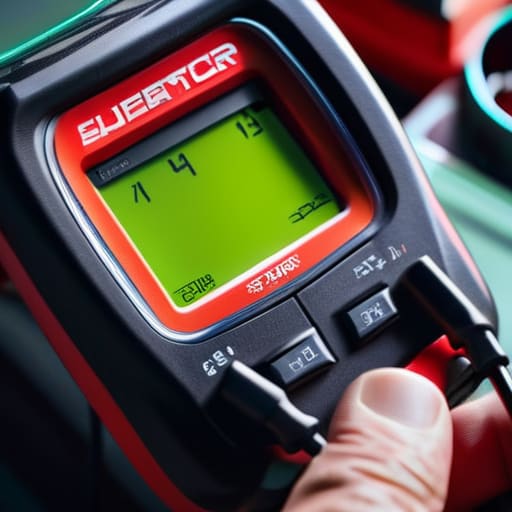
If you want to stop guessing and actually see what’s happening inside those terminals, you need to grab a multimeter. Most people just look at the voltage and think they’re good, but that’s a rookie mistake. A high voltage reading doesn’t always mean your battery is actually healthy; it just means it has a surface charge. To get the real story, you need to perform a multimeter battery diagnostic while the car is sitting idle. I always check the resting voltage first—if it’s sitting below 12.6 volts, your battery is already struggling to hold a full charge.
But here’s where most people get tripped up: the difference between state of charge vs state of health. Your battery might show 12.6 volts (full charge), but if it’s old, it might not have the “muscle” left to actually crank the engine under load. If you want to be thorough, watch the voltage drop while someone else turns the key. If that number plunges instantly, you’re looking at serious battery capacity degradation. It’s better to catch that drop now than to be stuck in a parking lot at 10 PM.
Understanding State of Charge vs State of Health

Here is where most people get tripped up, and it’s exactly how shops overcharge you for a “dead” battery that isn’t actually dead. You have to understand the difference between state of charge vs state of health. Think of it like a smartphone: the state of charge is just how much juice is in the tank right now—like being at 20% versus 80%. But the state of health? That’s the actual condition of the battery itself. A battery can be fully charged but still be trash because it can no longer hold a load.
When I’m looking at a car that struggles to crank, I’m looking for signs of battery capacity degradation. Over time, chemical changes inside the cells mean the battery simply can’t store as much energy as it did when it was new. You might do a quick multimeter check and see 12.6 volts, which looks great on paper, but that doesn’t tell you if the battery is about to give up the ghost. If you don’t distinguish between a low charge and a failing unit, you’ll end up replacing perfectly good batteries or, worse, getting stranded by one that looks “fine” on a voltmeter.
5 Ways to Stop Your Battery From Leaving You Stranded
- Clean those terminals. If you see white, crusty powder buildup on your battery posts, it’s acting like an insulator and messing with your connection. Grab a wire brush and some baking soda to clear it out so the current actually flows where it’s supposed to.
- Watch for “phantom drains.” If your battery keeps dying even though it’s relatively new, you might have a parasitic draw. Use your multimeter to see if something—like a busted interior light or a faulty sensor—is sucking power while the car is turned off.
- Mind the temperature swings. Extreme heat is actually a bigger killer for batteries than the cold. If you live somewhere where it’s scorching in the summer, your battery’s internal chemistry is basically cooking itself, so don’t be surprised if it fails sooner than expected.
- Keep an eye on the age. Most batteries have a decent lifespan of three to five years. If you’re hitting that four-year mark, don’t wait for the “click-click-click” of a dead starter; just start planning for a replacement.
- Don’t ignore the smells. If you pop the hood and catch a whiff of something like rotten eggs, that’s a huge red flag. It usually means the battery is leaking gas or overcharging, and honestly, that’s a safety issue you shouldn’t mess around with.
The Bottom Line on Your Battery
Don’t confuse a full charge with a healthy battery; a battery can show 12.6 volts but still lack the cranking power to actually start your car when you’re in a rush.
Grab a decent multimeter and stop guessing—testing the voltage yourself is the only way to know if you’re looking at a quick fix or an expensive replacement.
Pay attention to how your battery behaves under load, because a battery that looks fine on paper might still fail the second you try to turn the key.
## Stop Guessing with Your Voltage
A battery might show 12 volts on a cheap tester and look fine, but that doesn’t mean it isn’t about to quit on you in the middle of a grocery store parking lot. Don’t just trust the surface level; you gotta look at the actual health of the cells if you want to stop getting blindsided by a dead engine.
Nikolai·Osterman
Don't Get Caught Off Guard

Look, checking your battery isn’t some high-level engineering feat; it’s just about knowing the difference between a low charge and a dying cell. If you’ve used your multimeter to verify the voltage and you actually understand the distinction between State of Charge and State of Health, you’re already ahead of 90% of the drivers on the road. Don’t just assume that because the lights turn on, everything is fine. A battery can show a decent voltage but still fail you the second you try to crank a cold engine in the middle of winter. Keep those readings in a notebook or a notes app so you can track the decline over time.
At the end of the day, my goal isn’t to turn you into a master mechanic overnight, but I want you to feel confident when you pop that hood. There is a massive difference between being a victim of a breakdown and being a driver who actually knows their machine. You don’t need to spend hundreds at a dealership just to get a “diagnostic report” that tells you what you could have found yourself with a cheap tool and ten minutes of your time. Grab your gear, stay patient, and take control of your own maintenance. Your wallet, and your peace of mind, will definitely thank you for it.
Frequently Asked Questions
My multimeter is giving me a weird reading even when the car is off, am I doing something wrong?
If you’re seeing something like 12.6V, you’re actually in the clear—that’s a healthy, fully charged battery. But if you’re seeing a massive drop or a reading that keeps jumping around while the ignition is off, you might have a parasitic draw or a bad ground. Double-check that your probes are making solid contact with the terminals and not just sitting on a layer of corrosion. Don’t let a funky number freak you out yet.
If my battery passes the voltage test, does that mean it's actually good for another year?
Not necessarily. A multimeter only tells you if the battery has enough voltage to turn the lights on right now, but it doesn’t tell you how much “juice” it can actually hold under a load. It’s like checking a phone that’s at 100% charge—it looks fine until you actually start using it and it dies in five minutes. If your battery is old, that voltage reading can be totally deceiving.
Do I need to do this check every time I change my oil, or just when the car starts acting up?
Look, you don’t need to pull out the multimeter every single time you swap the oil. That’s overkill and just wastes your time. But, if you’re already under the hood for an oil change, you might as well take ten seconds to glance at the battery terminals for any white, crusty corrosion. I usually just run a quick check if I notice the engine cranking a bit slower than usual or if it’s been a few months since my last deep dive.
