I remember watching my dad struggle with a set of unevenly worn front tires on an old sedan back in my garage, and the shop owner tried to tell him he needed a whole new set just because the tread looked “off.” That’s total nonsense. Most people think they need a specialized lift or a professional setup to keep their rubber even, but honestly, a basic tire rotation guide is all you really need to stop wasting money. You don’t need a fancy degree or a bay at a dealership to make sure your tires wear down at the same rate; you just need to understand the pattern and not get intimidated by the jack.
In this guide, I’m stripping away all the dealership fluff and giving you the straight truth on how to do this yourself. I’ll walk you through the specific patterns for different drive trains, the exact tools you should have in your trunk, and the common mistakes that actually end up causing more harm than good. My goal isn’t to turn you into a master mechanic overnight, but to make sure you have the confidence to handle this simple task so you can keep your hard-earned cash in your pocket instead of the shop’s.
Table of Contents
- Step-by-Step Instructions
- Mastering Jack and Lug Wrench Usage Without the Stress
- Cracking the Code of Tire Rotation Patterns for Longevity
- Pro Tips to Keep You from Making a Mess of It
- The Bottom Line on Keeping Your Rubber Healthy
- The Real Reason to Rotate
- Don't Let the Shop Overcharge You
- Frequently Asked Questions
Guide Overview
Tools & Supplies
- Jack to lift the vehicle safely
- Jack stands to secure the vehicle
- Lug wrench or impact wrench to remove nuts
- Torque wrench to tighten nuts to spec
- Wheel chocks to prevent rolling
- Gloves for hand protection
Step-by-Step Instructions
- 1. First things first, find a flat, solid spot to park. You don’t want to be doing this on a slope or on soft dirt because once that jack starts moving, you’re in real trouble. Grab your lug wrench and your jack, and make sure you’ve got your wheel chocks handy to block the tires that aren’t moving.
- 2. Before you even think about lifting the car, grab your lug wrench and loosen the nuts on each wheel. You don’t want to take them all the way off yet; just crack them loose while the tire is still touching the ground. It’s way easier to break them loose with the weight of the car holding the wheel in place.
- 3. Now, get your jack under a solid frame point—check your owner’s manual if you aren’t sure, because you don’t want to be jacked up on a plastic trim piece. Lift the car until the tire is off the ground, then slide a jack stand under the frame for safety. Never, and I mean never, trust just a hydraulic jack while you’re working under or near the car.
- 4. Once the car is stable, finish unscrewing the lug nuts and pull the wheels off. This is where I usually grab my magnetic parts tray from my pocket so I don’t lose any of the hardware in the grass or the garage floor. Keep the nuts in order so you don’t get confused when it’s time to put them back on.
- 5. Now you need to move the tires according to your car’s specific pattern. If you’ve got a front-wheel-drive car, you’ll usually move the front tires straight back to the rear, and the rear tires go to the front but cross them over to the opposite sides. If you’re working on an All-Wheel Drive setup, double-check your manual because the pattern might be totally different.
- 6. Slide the tires back onto the hubs, making sure they sit flush against the mounting surface. Put the lug nuts back on by hand and tighten them as much as you can without a wrench. This helps prevent the wheel from wobbling or threading the bolts incorrectly while you’re getting things ready.
- 7. Lower the jack until the tires are touching the ground again, then take your wrench and tighten those lug nuts for real. You want to do this in a star pattern—not just going in a circle—to make sure the pressure is even across the wheel. Give them one last firm tug, pull your tools inside, and you’re done.
Mastering Jack and Lug Wrench Usage Without the Stress
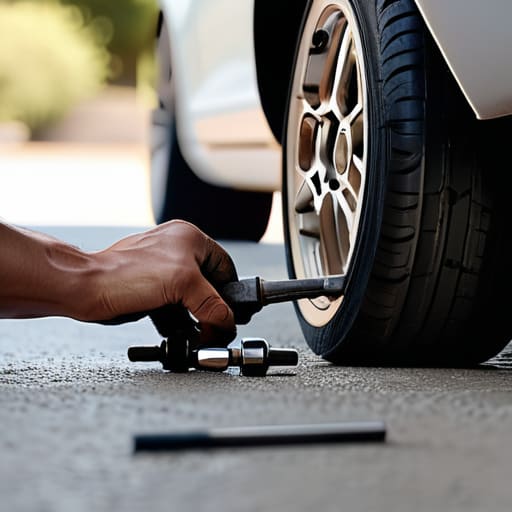
Look, I’ve seen plenty of guys struggle with a stuck lug nut or, worse, a jack that starts to slip because they weren’t paying attention. When it comes to jack and lug wrench usage, the biggest mistake is rushing. Before you even lift the car, make sure you’re on level ground—concrete is your best friend here. Once you crack those lug nuts loose while the car is still on the ground, you’ve already won half the battle. Trying to break them loose while the wheel is spinning in the air is a recipe for a massive headache and a lot of wasted energy.
Once the car is up, don’t just toss the jack anywhere. Find a solid frame point; if you lift on the wrong spot, you’re looking at expensive body damage. When you’re tightening everything back up, remember to use a star pattern. It’s not just some textbook rule; it ensures the wheel sits perfectly flush against the hub. Getting this right is a huge part of tire lifespan extension, because an unevenly seated wheel is going to cause vibrations that’ll drive you crazy. Just take your time and stay focused.
Cracking the Code of Tire Rotation Patterns for Longevity

Look, I see people at the shop all the time who think you just swap the fronts with the rears and call it a day. That’s a mistake. If you want actual tire lifespan extension, you have to understand how your specific setup moves. For a standard front-wheel-drive car, you’re usually looking at an X-pattern, where the rear tires move straight to the opposite front corners. But if you’re driving something with an AWD system, you can’t just wing it; you need to check your manual for the specific all-wheel drive tire rotation sequence, or you might end up stressing the drivetrain.
The whole point of mastering these different tire rotation patterns is to fight off uneven wear before it starts. If you notice the inside edge of your tread is wearing faster than the outside, you’re likely dealing with alignment issues or just a bad rotation habit. Stick to your automotive maintenance schedule and don’t skip these intervals. It’s way cheaper to spend twenty minutes in your driveway now than to drop a few hundred bucks on a fresh set of rubber because you got lazy.
Pro Tips to Keep You from Making a Mess of It
- Double-check your tire pressure before you even touch a lug nut. There’s no point in rotating everything perfectly only to realize one of them was low to begin with, and it’ll mess up your readings once they’re back on the ground.
- Don’t go overboard with the impact wrench. I see guys at the shop over-tighten everything until they strip the studs, and then they’re stuck with a massive bill. Hand-tighten them first, then use a torque wrench to get them just right.
- Keep a close eye on your tread depth while you’ve got the wheels off. If one tire is looking way more worn than the others, rotating it might just be a band-aid for an alignment issue you need to actually fix.
- Always grab a clean rag to wipe down the mounting surfaces on the rim. If there’s grit or rust sitting between the wheel and the hub, it can cause vibrations that feel like a death wobble once you hit highway speeds.
- Remember that your spare might be a “donut.” If you’re rotating a set and one of your main tires is shot, don’t try to force a temporary spare into your regular rotation pattern; it’s not built for that kind of abuse.
The Bottom Line on Keeping Your Rubber Healthy
Don’t let a shop charge you fifty bucks for something you can do in twenty minutes; just keep your lug wrench and a jack handy so you aren’t stuck waiting on an appointment.
Pay attention to your tread—if you’re rotating them and one side looks way more worn than the rest, you’ve probably got an alignment issue that needs more than just a quick swap.
Consistency is everything, so don’t wait until your tires look bald to check them; stick to a regular rotation schedule and you’ll squeeze way more life out of your investment.
The Real Reason to Rotate
Most shops will charge you a premium just to move some rubber around, but honestly? It’s not rocket science. If you take twenty minutes to swap your tires yourself, you aren’t just saving cash—you’re making sure you aren’t buying a whole new set of tires a year earlier than you should.
Nikolai·Osterman
Don't Let the Shop Overcharge You
Look, at the end of the day, rotating your tires isn’t some mystical ritual that requires a master certification. It really just comes down to three things: having a solid jack, knowing your specific rotation pattern, and making sure you actually torque those lug nuts down properly. If you can manage those basics, you’re already ahead of most drivers who just blindly trust whatever a shop tells them. You’ve learned how to handle the gear and how to spot the wear patterns, which means you aren’t just guessing anymore—you’re actually taking control of your vehicle’s lifespan.
I know it can feel a little intimidating the first time you’re staring at a heavy wheel and a greasy lug nut, but trust me, the feeling of doing it yourself is unmatched. There’s a massive sense of pride in knowing that your car is running better because you put in the work, not because you handed over a credit card. Don’t let the fear of making a mistake keep you in the passenger seat. Grab your tools, get a little grease under your fingernails, and just start doing it. Your wallet and your car will definitely thank you in the long run.
Frequently Asked Questions
How often should I actually be doing this if I'm not driving a ton?
Look, I get it. If your car is mostly just sitting in the driveway or you’re only hitting the grocery store, the manual’s “every 5,000 miles” rule feels like overkill. But don’t let it sit forever. Even if you aren’t putting miles on it, rubber degrades and weight distribution still matters. Honestly? Just aim for once a year or every six months. It’s easier to spend twenty minutes now than to replace a whole set of tires later.
Do I need to worry about rotating my spare tire too, or is that just extra work?
Honestly, don’t sweat it. If it’s just sitting in your trunk, you don’t need to worry about rotating it with the others. The goal of rotation is to even out the tread wear on the tires actually touching the pavement. Since your spare isn’t doing any work, it’ll stay exactly as it is. Just make sure you check the air pressure in it every few months so it isn’t flat when you actually need it.
Is it safe to rotate them myself if I don't have a torque wrench to tighten the lugs?
Look, I’ll be real with you: it’s doable, but it’s not ideal. If you’re just using the lug wrench that came with the car, you’re mostly relying on muscle memory to avoid over-tightening or leaving them loose. It’s risky because uneven torque can warp your brake rotors. If you can’t swing a torque wrench right now, just make sure you tighten them in a star pattern and double-check them after your first drive.
