There’s nothing quite like that sinking feeling when you turn the key, hear nothing but a pathetic click-click-click, and realize you’re stranded. I remember being stuck in my driveway at 6:00 AM, shivering in a grease-stained hoodie, thinking I’d have to pay some tow truck company a fortune just to get a simple battery jump start. Most people think you need a specialized kit or a mechanic’s certification to get moving again, but honestly? That’s just a way for shops to pad their invoices. Once you understand the basic flow of electricity, you’ll realize this is one of those tasks that’s actually pretty easy if you don’t rush it.
In this guide, I’m skipping the textbook fluff and giving you the real-world method I use every day at the shop. I’ll walk you through exactly how to hook up those cables without blowing a fuse or causing a spark where you don’t want one. You’re going to learn the safe sequence for connecting the clamps and how to know when your car is finally ready to roar back to life. No hype, no unnecessary jargon—just the facts you need to get back on the road.
Table of Contents
Guide Overview
Tools & Supplies
- Jumper cables (Heavy-duty cables for reliable connection)
- Vehicle manual (To locate specific jump points)
- Donor vehicle (Must have a functioning battery)
- Dead vehicle (Must have a functional starter motor)
Step-by-Step Instructions
- 1. First things first, get your donor car and your dead car parked close enough so the cables can reach, but make sure they aren’t actually touching each other. If the cars are touching, you could end up with a weird electrical short that’ll make your day a whole lot worse.
- 2. Pop both hoods and find your battery terminals. You’re looking for the plus sign (+) for the positive terminal and the minus sign (-) for the negative. If you see a bunch of white, crusty gunk on the metal, scrape it off with a wire brush or even an old screwdriver so you get a solid connection.
- 3. Grab your jumper cables and start with the red one. Clip one end to the positive (+) terminal on the dead battery. Then, take the other end of that same red cable and clip it to the positive terminal on the good battery. It’s basically just making a bridge between the two.
- 4. Now grab the black cable. Clip one end to the negative (-) terminal on the good battery. For the last clip, don’t attach it to the negative terminal of the dead battery—that can actually cause a spark right near the battery gases. Instead, find a solid, unpainted metal part of the engine block or the frame on the dead car.
- 5. Hop in the donor car and crank the engine. Let it run for a few minutes to get a decent charge flowing into the dead system. If it stutters or sounds weak, just give it more time before you try to turn the key in the other car.
- 6. Now, try to start your car. Once it fires up and stays running, don’t just shut it off immediately. You need to keep it running for at least twenty minutes, or even better, go for a quick drive around the block to let the alternator do its job and top that battery back up.
- 7. When you’re ready to disconnect, do everything in the exact reverse order you did it. Take the black cable off the dead car’s frame first, then the good battery, then the dead battery, and finally the good battery’s positive terminal. It sounds tedious, but following the order keeps you from accidentally sparking anything.
Spotting the Signs of a Failing Car Battery Early

Look, the worst time to find out your battery is shot is when you’re already late for work and the engine just clicks. If you want to avoid that headache, you’ve got to pay attention to the little things. One of the most common signs of a failing car battery is a slow crank—you know that heavy, sluggish sound when you turn the key, like the car is struggling to wake up? That’s a massive red flag. You might also notice your interior lights dimming when you idle at a stoplight or a weird, rotten egg smell coming from under the hood, which usually means the battery is leaking gas.
Another thing I always tell people at the shop is to keep an eye on your electronics. If your power windows are moving slower than usual or your dashboard lights start acting possessed, you’re likely dealing with dead car battery symptoms before the car actually dies on you. It’s way better to catch it early and swap it out in your driveway than to be stuck on the shoulder of a highway trying to figure out how to use jumper cables safely in the dark.
How to Use Jumper Cables Safely Without the Stress
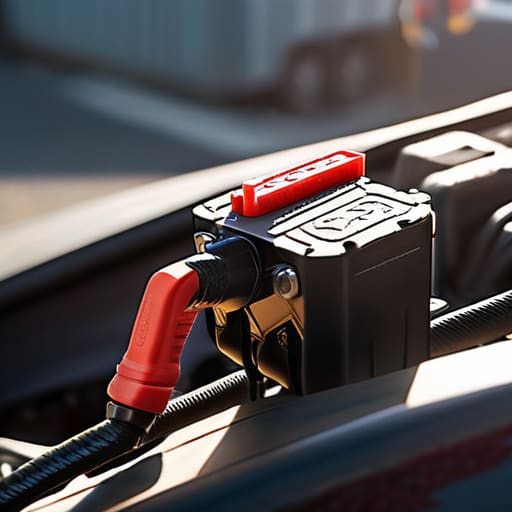
Look, I’ve seen plenty of people rush this and end up with a face full of sparks or, worse, a fried ECU. When you’re figuring out how to use jumper cables safely, the biggest mistake is being sloppy with the connections. Always make sure the cables aren’t touching each other while they’re clamped onto the terminals. If they touch, you’re going to get a massive arc that’ll definitely ruin your day. Also, double-check that both cars are off and in park before you even think about clipping anything on.
One thing my dad always hammered into me is that the ground connection is everything. Don’t just slap the last negative clamp onto the dead battery’s negative terminal; instead, find a solid, unpainted metal part of the engine block or the frame on the dead car. This helps prevent any stray sparks from igniting battery gases. If you’re nervous about using another vehicle, jump starting a car with a portable power pack is a much cleaner, lower-stress way to get moving without the mess of tangled wires.
Pro Tips to Keep You From Making a Mess of It
- Don’t just hook it up and crank it immediately. Once the cables are connected, give the dead car a minute or two to let a little bit of juice trickle in before you actually try to turn the key. It saves your starter from taking a beating.
- Watch out for the “spark.” When you’re attaching that last ground clamp, it might pop or spark a little. It’s usually fine, but don’t go shoving it right next to any leaking battery acid or gas fumes unless you want a very bad day.
- Check your cable quality before you even get out of the car. If you’re using those super thin, cheap cables from a gas station bargain bin, they might not actually carry enough current to do the job. Look for thicker, heavy-duty wires if you can.
- Keep the cars from touching. I see people do this all the time—they pull the cars up so the frames are touching. Just don’t. You want the vehicles close enough for the cables to reach, but keep them physically separated to avoid any weird electrical shorts.
- Once the car starts, don’t kill the engine right away. You need to drive it around for at least 20 or 30 minutes to let the alternator actually do its job and recharge that battery. If you just shut it off immediately, you’ll be right back where you started.
The Bottom Line
Don’t rush the process—once you hook everything up, give the good battery a few minutes to breathe before you try to crank the engine.
If your battery keeps dying even after a jump, it’s probably not just a dead cell; you might be looking at a bad alternator or a parasitic draw.
Always double-check your connections; a loose clamp is the number one reason why a jump start fails, and it’s a massive headache to troubleshoot.
## The Real Truth About Dead Batteries
Look, a dead battery isn’t a catastrophe; it’s just a minor inconvenience. Most people freak out and call a tow truck, but if you’ve got a set of cables and five minutes of patience, you can handle it yourself. Don’t let a little lack of voltage make you feel like you don’t belong under your own hood.
Nikolai·Osterman
Don't Let a Dead Battery Stall You
Look, at the end of the day, getting a jump start is just about staying calm and following the right sequence. You’ve learned how to spot those early warning signs like slow cranking or dim lights, how to connect the cables without making a mess, and most importantly, how to do it safely. Just remember: red to positive, black to negative, and always double-check your connections before you try to crank that engine. If you keep your head on straight and follow these steps, you’re not just avoiding a massive towing fee—you’re taking control of your own ride.
I know it can feel intimidating when you’re stuck in a dark parking lot with a dead engine, but honestly, that’s how everyone starts. Every time you get your hands a little greasy or figure out a fix that used to scare you, you’re becoming more capable. Don’t let the fear of making a mistake keep you from learning. My goal is to make sure the next time you see those dashboard lights flicker out, you don’t feel helpless; you just feel ready to work. You’ve got this, and your car is lucky to have someone looking out for it.
Frequently Asked Questions
Can I jump-start a car if the battery is completely dead, or will it just not take a charge?
Look, if the battery is stone-cold dead—meaning there’s zero juice left to even click the starter—you can still jump it. The donor car’s power will push enough current through to get your engine turning. But don’t get it twisted: a jump is just a temporary fix. If it’s that drained, your battery is likely toast or won’t hold a charge. Drive straight to an auto parts store to get it tested.
Is it actually safe to jump-start a modern car with all those sensitive electronics and sensors?
Look, I get it. You see all those fancy sensors and touchscreens and think, “If I mess this up, am I frying a computer module?” Honestly, it’s a fair question. If you follow the right sequence—connecting the positive terminals first and making sure your connections are tight—you’re fine. The real danger isn’t the electronics; it’s a bad connection causing a spark. Just stick to the order, and your ECU will be just fine.
How do I know if my battery is just drained from leaving a light on or if it's actually shot and needs replacing?
Honestly, the easiest way to tell is by how it reacts to a jump. If you get the car running and it stays alive, you probably just left a dome light on. But if the car dies the second you pull the cables off, or if it struggles to crank even after a long drive, that battery is toast. If it’s over three years old and acting moody, just stop fighting it and get a new one.
