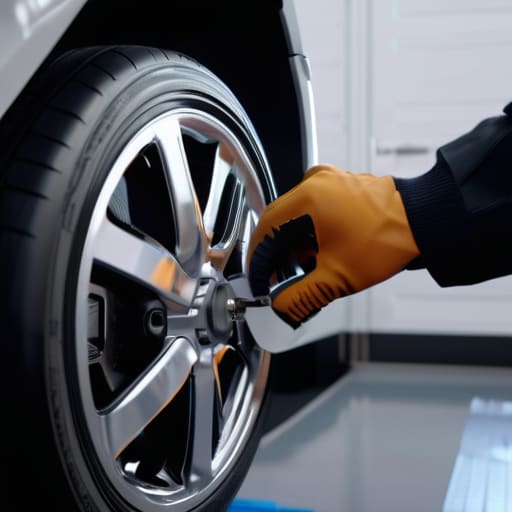
I was under a lift at the shop last Tuesday when a customer came in, looking absolutely defeated because his dashboard was lit up like a Christmas tree. He was convinced he needed a whole new computer module because his tire pressure sensor was acting up, and he was ready to drop a couple hundred bucks just to make the light go away. Honestly, it kills me seeing people get totally intimidated by a little bit of dashboard feedback. Most of the time, it’s not some high-tech conspiracy or a massive mechanical failure; it’s usually just a sensor that needs a quick reset or a simple battery swap that you could do in your own driveway.
I’m not here to sell you on expensive diagnostic software or convince you that you need a degree to understand your own car. My goal is to pull back the curtain and show you exactly how these systems work without all the unnecessary fluff. I’ll walk you through what that light is actually trying to tell you and how to tell the difference between a real leak and a sensor that’s just being moody. You’ve got this, and I’m going to make sure you don’t get ripped off.
Table of Contents
What That Tpms Warning Light Meaning Really Is

So, you see that little yellow horseshoe icon with the exclamation point glowing on your dash, and your heart sinks a bit. Here’s the thing: the tpms warning light meaning isn’t always a death sentence for your commute. Most of the time, it’s just your car’s way of saying one of your tires is running a bit low on air. You might notice some low tire pressure symptoms first, like the car feeling a little heavy or pulling slightly to one side when you’re hitting the highway.
But, I’ve seen plenty of cases where the light stays on even after you’ve topped off the air. That’s usually when things get a bit more technical. Inside your wheel, there’s a little electronic module that talks to your car’s computer. These things aren’t permanent; they have a limited tpms sensor battery life, and once that internal cell dies, the sensor becomes a paperweight. If you’ve checked your PSI and the light won’t budge, you’re likely looking at a component that’s just reached its expiration date.
Spotting Low Tire Pressure Symptoms Before They Break You

Most people wait until that annoying light pops up on the dash, but by then, you’re already playing catch-up. If you want to stay ahead of it, you’ve got to pay attention to how the car actually feels while you’re driving. One of the biggest low tire pressure symptoms is a subtle change in steering. If your car starts pulling to one side or feels a bit “mushy” when you take a corner, don’t just assume it’s the road surface. It’s often just a tire that’s losing air faster than the others.
You might also notice a weird vibration through the steering wheel, especially at highway speeds. It’s not always a bad alignment; sometimes, it’s just uneven pressure causing the tire to deform. I always tell people to keep an ear out, too. A soft, rhythmic thumping sound can be a dead giveaway that a tire is running low. Catching these things early is way better than dealing with a sudden blowout or wondering about a massive tire pressure sensor replacement cost because you let a simple leak turn into a shredded sidewall.
5 Ways to Deal With Your Sensors Without Getting Ripped Off
- Don’t just go straight to the shop when that light pops up; grab a cheap, handheld tire pressure gauge first to see if it’s actually a real pressure issue or just a glitchy sensor.
- Check your levels when your tires are “cold”—meaning before you’ve driven more than a mile—because heat from the road messes with the readings and gives you a fake number.
- Keep an eye on the temperature outside, because a sudden cold snap is usually the culprit for a TPMS light, not a nail in your tire.
- If you’re rotating your tires, make sure your shop (or you) actually resets the system, otherwise the car might think the front left is still the rear right.
- If you see a “service TPMS” message instead of just a light, that’s usually the sensor’s battery dying, and you’ll likely need to swap the sensor out rather than just adding air.
The Bottom Line on Your Sensors
Don’t let a glowing dashboard light freak you out; most of the time, it’s just a simple air top-off, not a total sensor meltdown.
Keep a cheap tire pressure gauge in your glovebox so you can verify the truth yourself before you even think about paying a shop to look at it.
If you notice your car pulling to one side or feeling sluggish, stop ignoring it—low pressure isn’t just annoying, it’s eating your gas money and your tread.
Don't Let a Dashboard Light Intimidate You
That little yellow horseshoe icon on your dash isn’t a death sentence for your car; it’s just your tire’s way of asking for a quick air check, and honestly, if you can handle a gas station pump, you can handle this.
Nikolai·Osterman
Don't Let the Dashboard Win
Look, at the end of the day, that TPMS light isn’t some mysterious omen of doom designed to drain your bank account. It’s just a sensor doing its job, telling you that your tires need a little attention. Whether it’s a simple drop in PSI due to a cold morning or a slow leak that needs a patch, knowing how to read the signs means you aren’t walking blindly into a repair shop. Just remember to check your pressures regularly, keep an eye out for those subtle handling changes, and don’t be afraid to grab a pressure gauge yourself. Once you understand the basics, you’ve already won half the battle against unnecessary mechanic fees.
My advice? Stop seeing your car as this complicated, untouchable machine and start seeing it as something you can actually manage. You don’t need a master technician’s certification to keep your rubber healthy and your drives safe. It’s all about taking that extra five minutes to investigate before a small issue turns into a blown sidewall on the highway. Grab your tools, trust your gut, and take control of your ride. You’ve got this, and honestly, once you start handling these small fixes yourself, you’ll realize that the hood isn’t nearly as intimidating as they want you to think.
Frequently Asked Questions
Do I actually have to replace the whole sensor if it stops working, or is there a way to just fix the connection?
Look, I’ll give it to you straight: you can’t really “fix” the sensor itself. These things are sealed units, and once the internal electronics or the battery die, they’re done. Trying to solder a connection inside a tiny, pressurized housing is a nightmare you don’t want. If the sensor’s dead, you’ve gotta swap it. But don’t let a shop charge you a fortune—sometimes it’s just a bad connection at the receiver, not the sensor.
Can I just use a regular air compressor to fix the light, or do I need some kind of special tool to reset the system?
Look, a regular air compressor is perfect for actually filling the tires—you definitely need that pressure to get things right. But once the tires are up to spec, the light might not just vanish instantly. Most cars just need a few minutes of driving to recalibrate. If it stays stuck, you might need a cheap TPMS reset tool or a specific sequence of steps in your car’s menu. Don’t let a shop charge you $100 just to hit a reset button.
If I get a flat tire and patch it, why does the warning light stay on even after I've filled the tire back up?
Look, just because you filled the air back up doesn’t mean the car’s computer knows you fixed it. Most systems need a “reset” to clear that light. Think of it like a notification on your phone that won’t go away until you actually tap it. Depending on your car, you might need to drive for a few miles to let the sensors recalibrate, or you might have to dive into your dashboard settings to hit reset manually.
