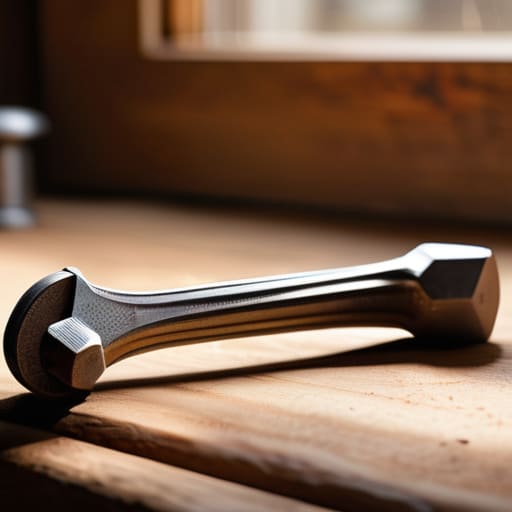
I remember being ten years old, stuck under my dad’s old sedan with a busted tie rod end, frantically digging through a metal toolbox because I couldn’t find the exact socket I needed. I was sweating, covered in grime, and honestly pretty close to throwing the whole wrench across the garage in frustration. That’s when he handed me a solid, heavy-duty adjustable wrench and told me to stop overthinking it. Most people think you need a massive, expensive set of specialized tools for every single nut and bolt, but that’s just a way for shops to inflate your bill. Sometimes, a single versatile tool is all that stands between you and a finished job.
Look, I’m not here to sell you on some fancy, gold-plated tool kit that’s going to sit in your trunk collecting dust. I’m going to show you how to pick an adjustable wrench that actually grips without stripping your bolts and, more importantly, when to use one so you don’t end up making a mess of your engine. I’ve spent enough hours in the shop to know which ones hold up and which ones are just cheap junk.
Table of Contents
- Choosing Between Metric vs Imperial Wrenches Without the Guesswork
- Finding the Right Jaw Width Capacity for Tight Spaces
- 5 Ways to Stop Turning Your Wrenches into Expensive Paperweights
- Quick Tips for Your Next Job
- The One Tool That Saves Your Sanity
- Getting the Job Done Right
- Frequently Asked Questions
Choosing Between Metric vs Imperial Wrenches Without the Guesswork
Here’s the thing that trips most people up when they first start working in a garage: the constant battle between metric vs imperial wrenches. If you’re working on a newer Japanese tuner or a modern domestic car, you’re almost certainly going to be dealing with metric bolts. But if you’re digging through an older project or some heavy-duty American machinery, you’ll need those imperial sizes. The biggest mistake I see beginners make is trying to force a wrench that’s just slightly off because they’re in a rush.
If the fit isn’t perfect, you aren’t just wasting time; you’re actively preventing bolt stripping from becoming a nightmare. When you use an adjustable tool that doesn’t seat tightly against the flats of the bolt, the jaws will slip, and once you round off that head, you’re looking at a much bigger, much more expensive headache. Before you start cranking, always double-check that the jaw is snug. It’s better to spend ten seconds verifying the size than ten hours trying to drill out a mangled fastener.
Finding the Right Jaw Width Capacity for Tight Spaces
Look, there is nothing worse than being halfway through a job, covered in grime, only to realize your tool is just a hair too fat to fit between the firewall and the engine block. When you’re shopping, don’t just look at how big the wrench is; you need to pay attention to the jaw width capacity. A wrench might have a massive opening, but if the head itself is too bulky, it’s useless in the tight spots where the real work happens. I’ve spent way too many afternoons fighting with a tool that was technically the right size but physically too thick to actually engage the bolt.
If you’re working on modern cars, you’re going to run into a lot of cramped quarters. I always tell people to aim for a slim-profile design if they can. It’s also about how the tool handles torque application tools in those awkward angles. If the jaws are too wide or the build is clunky, you’ll lose your leverage, and that’s exactly how you end up preventing bolt stripping from becoming an impossible task. You want something that feels surgical, not like you’re swinging a sledgehammer in a closet.
5 Ways to Stop Turning Your Wrenches into Expensive Paperweights
- Always tighten the knurled screw before you start pulling. If the jaws have any wiggle room, you’re going to slip, and that’s how you end up rounding off a bolt head or, worse, smashing your knuckles against the frame.
- Face the pressure toward the fixed jaw. When you’re applying heavy torque, make sure the movable part of the wrench is pressing against the solid, non-moving side. It keeps the tool from twisting or snapping under the load.
- Stop using them for everything. I get it, an adjustable wrench is convenient, but if you’re working on a high-torque situation, grab a dedicated socket or a fixed combination wrench. Adjustables are great for odd sizes, but they aren’t built for heavy-duty lug nut scenarios.
- Check the jaw alignment regularly. If you see the jaws starting to tilt or gap when they meet, the tool is worn out. Using a warped wrench is a fast track to stripped fasteners, and nobody wants to spend three hours drilling out a broken bolt.
- Keep the mechanism clean of grit and old grease. If that adjustment screw gets gummy with shop grime, you’ll end up forcing it, which can strip the threads. A quick wipe-down after a job keeps it sliding smooth for the next time you’re stuck in a tight spot.
Quick Tips for Your Next Job
Don’t just grab any old wrench; make sure the jaws are wide enough to grip the bolt head fully so you don’t end up stripping it and making a massive headache for yourself.
Always double-check if you’re working on a metric or imperial setup before you start cranking, because trying to force a fit is the fastest way to ruin a bolt.
Invest in a decent quality adjustable wrench that feels solid in your hand—if it feels flimsy or wobbles when you tighten it, it’s going to fail you when you’re mid-repair.
The One Tool That Saves Your Sanity
Look, you aren’t going to have a perfect socket set for every single weird bolt on a twenty-year-old engine, and that’s fine. An adjustable wrench isn’t a way to avoid buying tools; it’s your way of making sure you don’t get stuck halfway through a job just because one bolt decided to be difficult.
Nikolai·Osterman
Getting the Job Done Right
At the end of the day, an adjustable wrench isn’t just some generic tool you grab when you’re too lazy to find a socket set; it’s a lifesaver when you’re elbow-deep in a tight engine bay. Just remember what we talked about: don’t get caught between metric and imperial measurements, and for the love of everything, pick a jaw width that actually fits the clearance you’re working with. If you invest in a decent tool that doesn’t slip the second you apply pressure, you’re going to save yourself a massive headache—and a lot of money—when that next bolt refuses to budge. Don’t settle for cheap, flimsy hardware that’s just going to strip your fasteners and leave you stranded mid-repair.
Look, I know staring at a disassembled engine can feel pretty intimidating when you’re first starting out. But honestly? Most of the stuff mechanics charge hundreds for is just a matter of having the right gear and the patience to see it through. You don’t need a fancy degree or a professional-grade toolbox to take control of your own vehicle. Grab your wrench, keep your workspace organized, and just take it one bolt at a time. You’ve got this, and before you know it, you’ll be doing these repairs in your own driveway without breaking a sweat.
Frequently Asked Questions
How do I know if the adjustable wrench I'm using is actually going to strip a bolt head?
If you feel the wrench “spongy” or see it shifting even a hair while you’re pulling, stop immediately. That’s the jaw slipping, and you’re seconds away from rounding that bolt head into a smooth, useless circle. A good adjustable should feel solid, like it’s locked in. If there’s any play in the jaws or the bolt feels like it’s sliding, you’ve either got a cheap tool or you haven’t tightened the screw enough. Don’t force it.
Is it worth spending extra money on a high-end brand, or will a cheap one from a big-box store get the job done?
Look, if you’re just tightening a loose bracket once a year, a cheap one from a big-box store won’t kill you. But if you’re actually turning bolts on a daily driver, buy the good stuff. Cheap wrenches have sloppy tolerances; they slip, they round off your bolt heads, and then you’re in real trouble. I’ve spent way too many hours drilling out stripped bolts because I tried to save twenty bucks. Buy quality once.
When should I stop using an adjustable wrench and just go grab a dedicated socket or fixed wrench instead?
Look, adjustable wrenches are lifesavers when you’re stuck, but they aren’t a substitute for everything. If you’re dealing with a high-torque bolt—like an oil drain plug or a suspension component—stop. Using an adjustable there is a one-way ticket to rounding off that bolt head, and then you’re in real trouble. If you can see a fixed socket or a dedicated wrench that fits, use it. Save the adjustable for the weird, one-off sizes.
