I remember sitting in my dad’s garage last summer, staring at an old S13 Silvia that wouldn’t even turn over, while a local shop quoted me four hundred bucks just to “look at it.” They were ready to claim the whole charging system was toast, but I knew better. Most people think you need a $5,000 diagnostic scanner to figure out why your lights are dimming or why your battery keeps dying overnight, but that’s just a way to pad a bill. Real alternator diagnosis isn’t about expensive computers; it’s about understanding how electricity actually flows through your engine bay and knowing which simple tests actually matter.
I’m not here to give you some textbook lecture or sell you on a fancy piece of gear you don’t need. In this guide, I’m going to show you how to use a basic multimeter to pinpoint exactly where the failure is happening. We’ll walk through the voltage tests and the load checks so you can stop guessing and start fixing. My goal is to make sure you walk away knowing if you actually need a new part or if you’re just dealing with a loose ground wire that’s costing you a fortune.
Table of Contents
- Step-by-Step Instructions
- Spotting the Signs of a Failing Alternator Before Youre Stranded
- Mastering Automotive Electrical Troubleshooting With Just a Multimeter
- Pro Tips to Keep You From Wasting Money
- The Bottom Line
- ## Don't Let the Shop Lie to You
- Don't Let the Lights Go Out on You
- Frequently Asked Questions
Guide Overview
Tools & Supplies
- Multimeter for testing voltage and continuity
- Voltmeter for battery health checks
- Flashlight for inspecting belt and wiring
- Rag or cloth for cleaning terminals
- Contact cleaner spray (optional) for connections
Step-by-Step Instructions
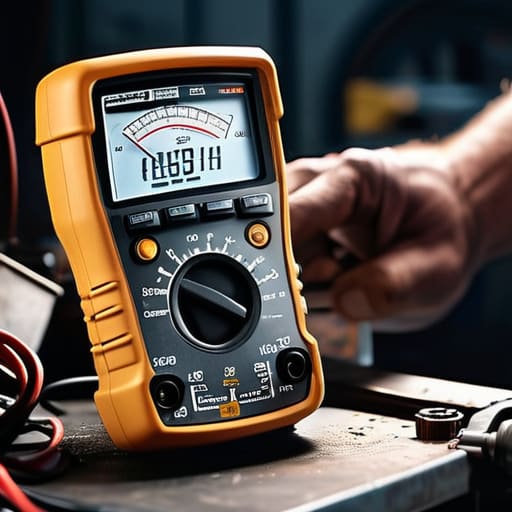
- 1. First thing you need to do is grab a multimeter. If you don’t have one, go to any hardware store; it’s a cheap investment that’ll save you hundreds of dollars in diagnostic fees later. Set your dial to DC voltage—usually the 20V setting—and make sure your leads are ready to go.
- 2. Pop the hood and locate your battery. You’re going to start by testing the battery’s “resting” state. Touch the red lead to the positive terminal and the black lead to the negative. With the engine completely off, you should see something around 12.6 volts. If that number is sitting way lower, like 10 or 11 volts, your battery might actually be the problem, not the alternator.
- 3. Now, fire up the engine. Once it’s idling, check that multimeter reading again. This is where the magic happens. A healthy alternator should push that voltage up into the 13.7 to 14.7 volt range. If the number stays flat or drops while the car is running, you’ve officially found your culprit.
- 4. To really put it through the wringer, turn on some heavy electrical loads. Flip on your headlights, crank the AC to max, and maybe even the rear defroster. Watch the multimeter closely. You want to see the voltage stay relatively steady; if it plummets toward 12 volts or lower while everything is running, your alternator isn’t keeping up with the demand.
- 5. If the numbers look okay but you’re still suspicious, do a quick visual inspection. Look for any frayed wires, loose connections, or even signs of oil leaking onto the alternator itself. Sometimes it’s not a dead unit, but just a loose belt or a corroded terminal that’s causing all the headache.
- 6. One last trick if you’re still unsure: listen. While the engine is running, use a long screwdriver as a makeshift stethoscope. Carefully touch the tip to the alternator housing and put your ear to the handle. If you hear a loud grinding or whining sound, the bearings inside are likely shot, and it’s time to start shopping for a replacement.
Spotting the Signs of a Failing Alternator Before Youre Stranded

Most people don’t realize their alternator is dying until they’re sitting in a dead car in a grocery store parking lot. By then, it’s too late. You really want to watch out for those weird, flickering dashboard lights or a sudden, unexplained dimming of your headlights when you’re idling at a stoplight. If your interior lights seem to pulse in sync with the engine RPM, that’s a massive red flag. It’s usually one of the clearest signs of a failing alternator that you can catch before the whole system gives up on you.
Another thing I always tell people at the shop: listen to your engine. If you hear a high-pitched squealing or a grinding noise coming from the front of the motor, don’t just turn up the radio. It might be a bad bearing inside the unit, or you might just need a quick alternator belt inspection to see if the tension is off. If the belt is slipping or glazed over, it won’t spin the pulley fast enough to keep things charged. Catching these small mechanical cues early can save you from a much more expensive tow bill later.
Mastering Automotive Electrical Troubleshooting With Just a Multimeter

Look, I’ve seen way too many people get charged a massive labor fee just because a mechanic decided to swap out a whole alternator when the problem was actually just a loose connection or a dying battery. If you want to get serious about automotive electrical troubleshooting, you need to stop guessing and start measuring. A decent multimeter is basically your superpower here. When you’re testing alternator with multimeter, don’t just check the numbers once and walk away. I always check the reading at idle, and then again with the headlights and AC cranked up. If that voltage drops significantly under load, you know you’ve got a problem.
Keep in mind that you’re looking for a specific battery charging voltage range—usually somewhere between 13.5 and 14.7 volts while the engine is running. If you’re seeing anything lower than 13, your alternator isn’t doing its job. Also, do a quick visual check of the belt tension while you’re at it; a slipping belt can mimic a bad alternator every single time. Don’t let them tell you it’s a complex electrical failure until you’ve actually seen the numbers on your screen.
Pro Tips to Keep You From Wasting Money
- Don’t just swap the alternator because the light’s on; check your battery terminals first. If they’re covered in white crusty corrosion, you aren’t looking at a bad alternator, you’re just looking at a bad connection.
- Keep an eye on your belt tension. If that serpentine belt is slipping or squealing, it might not be able to spin the alternator pulley fast enough to charge anything, making it look like the unit is dead when it’s actually just starving for speed.
- Watch your dashboard lights like a hawk. If your headlights dim when you’re idling at a stoplight but brighten up when you rev the engine, that’s a classic sign your alternator is struggling to maintain a steady output.
- Test it while it’s actually working. A multimeter reading while the car is sitting off tells you nothing. You need to see that voltage jump when you start the engine—if it doesn’t hit somewhere between 13.5 and 14.7 volts, you’ve got a problem.
- Listen for the “whine.” A healthy alternator shouldn’t sound like a jet engine taking off. If you hear a high-pitched mechanical whine coming from the engine bay, the internal bearings are probably shot and it’s only a matter of time before it quits on you.
The Bottom Line
Don’t let a shop scare you into a replacement right away; most of the time, it’s just a matter of confirming if the alternator is actually outputting the right voltage.
A decent multimeter is your best friend here—stop guessing based on weird lights on your dash and start looking at the actual numbers.
Catching the signs early, like dimming headlights or a dying battery, is the difference between a quick fix in your driveway and being stuck on the side of the road at night.
## Don't Let the Shop Lie to You
Most mechanics will try to sell you a brand-new alternator the second your battery light flickers, but half the time it’s just a loose connection or a dying voltage regulator. Don’t just swap parts blindly; grab a multimeter, check your numbers, and actually see what’s failing before you drop five hundred bucks on something you might not even need.
Nikolai·Osterman
Don't Let the Lights Go Out on You
At the end of the day, diagnosing an alternator isn’t some dark art reserved for guys with decades of experience. We’ve covered the red flags—like those dimming headlights or that annoying battery light—and we walked through how to actually use a multimeter to see if your charging system is truly dead or just acting up. Remember, if your voltage readings are bouncing all over the place while the engine is running, you aren’t looking at a mystery; you’re looking at a failing component that needs attention before it leaves you stuck in a parking lot at midnight.
I know it can feel intimidating when you’re staring at a mess of wires and sensors, but don’t let that stop you. Every time you pick up a tool instead of calling a tow truck, you’re taking back control of your car and your wallet. Most people get ripped off because they’re afraid to look under the hood, but once you realize that it’s just a series of logical steps, the fear disappears. Grab your gear, trust your measurements, and keep turning wrenches. You’ve got this.
Frequently Asked Questions
If my battery is brand new but it's still dying overnight, could it still be the alternator's fault?
Yeah, absolutely. If that battery is fresh and still draining, your alternator is the prime suspect. Think of it this way: the battery is just a storage tank, but the alternator is the pump that keeps it full while you drive. If the alternator is putting out weak voltage or has a faulty diode, it won’t charge the battery properly. You might wake up to a dead car because it never actually got a full charge the night before.
Is there any way to tell if it's just a loose or corroded belt instead of the alternator actually being shot?
Yeah, for sure. Don’t go swapping parts just yet. If you hear a high-pitched squeal when you start the car or floor the gas, that’s usually a belt issue, not the alternator. Check the tension—if it’s slipping, it won’t spin the pulley fast enough to charge. Also, look at the belt for cracks or fraying. If it’s just crusty, clean the terminals or tighten the belt before you drop cash on a new unit.
Can I just swap in an alternator from a different car model, or do I need to find the exact same part number?
Look, I get the temptation to grab whatever’s cheap on eBay, but don’t do it. It’s tempting to think “it’s just a motor,” but different cars have different mounting points, pulley sizes, and—most importantly—different electrical connectors. If the plug doesn’t match, you’re stuck. Even if it fits, the amperage might be off, which can fry your electronics. Stick to the exact part number or a guaranteed compatible match. Save yourself the headache.
