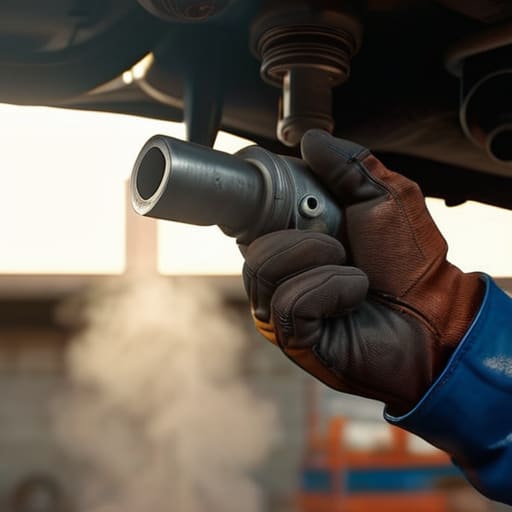
There’s nothing quite like that sudden, rhythmic ticking sound that starts creeping up from under your floorboards every time you hit the gas. I remember the first time I heard it on my old project car; I was convinced I’d blown a gasket and was looking at a massive repair bill. Most shops will see that sound and immediately try to sell you a brand-new, high-priced catalytic converter or a full manifold replacement just to pad their margins. But here’s the truth: a lot of times, a simple exhaust leak repair is way less intimidating—and way cheaper—than the guys in the clean jumpsuits want you to believe.
I’m not here to give you some textbook lecture or a list of parts you don’t actually need. I’ve spent enough time under greasy chassis to know that most of these issues come down to a rusted bolt or a cracked flange that you can tackle with a basic socket set and some patience. I’m going to walk you through how to pinpoint exactly where that leak is coming from and how to patch it up yourself. My goal is to get you back on the road without you feeling like you just got ripped off at the dealership.
Table of Contents
- Spotting Exhaust System Symptoms Before They Get Costly
- The Truth About That Scary Car Exhaust Smell in Cabin
- Don't Get Ripped Off: 5 Ways to Tackle the Leak Yourself
- Quick Lessons Before You Get Under the Car
- ## Don't Let a Small Crack Break Your Bank
- Don't Let a Small Leak Break Your Bank
- Frequently Asked Questions
Spotting Exhaust System Symptoms Before They Get Costly

If you’re hearing a sound that wasn’t there during your last commute, don’t just crank the radio to drown it out. Most people ignore a ticking or roaring noise, thinking it’s just an old car acting up, but that’s usually the first sign of trouble. One of the biggest red flags I see in the shop is a sudden car exhaust smell in cabin while you’re sitting at a red light. If you can smell that sulfurous, burnt scent through your vents, you aren’t just dealing with a nuisance; you’re dealing with a serious carbon monoxide danger vehicle situation. That gas doesn’t care if you’re driving a brand-new SUV or my old project tuner—it gets into your lungs, and that’s not something to mess with.
Beyond the smell, pay attention to how your engine feels. If the car feels sluggish or you notice a weird vibration under your feet, you might be looking at something more serious like a cracked manifold. Sometimes it’s just a simple fix, but if you wait too long, a tiny crack can turn into a massive job like an exhaust manifold bolt replacement, which is a total headache. Catching these symptoms early is the difference between a quick fix and a massive bill.
The Truth About That Scary Car Exhaust Smell in Cabin

If you’re sitting at a red light and suddenly notice a weird, acrid scent drifting through your vents, don’t just roll down the windows and pretend it’s fine. That car exhaust smell in cabin is your car’s way of screaming that something is wrong. It’s not just a nuisance; it’s a massive red flag. When you smell that stuff inside, it means gases that should be exiting out the tailpipe are finding a way into your passenger compartment.
The reality is that this isn’t just a bad smell—it’s a serious carbon monoxide danger vehicle issue. Carbon monoxide is colorless and odorless on its own, so if you’re smelling the sulfur or the heavy fumes, you’re already breathing in the byproduct. This usually happens because of a crack in the manifold or a failing gasket. I’ve seen people ignore this for weeks, thinking it’s just a “quirk” of an old car, but you’re essentially inhaling engine waste while you drive. If you catch it early, you might just be looking at a simple gasket swap rather than a massive headache later.
Don't Get Ripped Off: 5 Ways to Tackle the Leak Yourself
- Grab a soapy water spray bottle. If you can safely run the car for a minute, spray some soapy water on the exhaust pipes; if you see bubbles popping, you’ve found your leak without needing a fancy smoke machine.
- Check your manifold bolts first. A lot of times, it’s not a broken pipe, it’s just a loose or snapped bolt on the manifold that’s letting air escape, and that’s a much easier fix than replacing the whole assembly.
- Don’t just slap on some cheap putty. If you’re using exhaust sealant, make sure the surface is ground down to bare metal first; if you apply it over grease or old rust, it’s going to flake off in ten minutes.
- Get yourself a decent set of penetrating oil. Before you even think about turning a wrench on those rusted-out clamps, soak them overnight. If you try to force a frozen bolt, you’re just going to snap it and turn a simple fix into a nightmare.
- Watch out for the flex pipe. If the leak is coming from that braided section, don’t bother trying to patch it with tape—it’s a moving part. You’re better off just swapping the whole flex pipe section out so you aren’t back under the car next week.
Quick Lessons Before You Get Under the Car
Don’t wait for a massive repair bill; if you hear a new ticking or roaring sound, it’s probably just a small leak that you can catch early.
If you start smelling exhaust inside the cabin, stop driving immediately—it’s not just annoying, it’s actually dangerous for you.
You don’t need to be a master mechanic to handle basic leaks, but you do need to grab the right tools and some patience so you don’t strip a bolt.
## Don't Let a Small Crack Break Your Bank
“An exhaust leak isn’t just some annoying noise; it’s your car telling you something is wrong before it turns into a massive repair bill. Most shops will try to sell you a whole new system, but usually, all you really need is a bit of patience, the right sealant, or a fresh gasket to get back on the road.”
Nikolai·Osterman
Don't Let a Small Leak Break Your Bank

Look, fixing an exhaust leak isn’t some impossible feat of engineering. We’ve covered how to listen for those telltale rattles, identify that nasty sulfur smell creeping into your cabin, and pinpoint exactly where the gas is escaping. Whether it’s a blown manifold gasket or just a rusted-out flange that needs a new bolt, the key is to act before the leak gets bigger. If you catch it early, you’re looking at a simple weekend project with a wrench and some sealant. If you wait, you’re looking at a massive repair bill and potentially damaging your engine’s sensors. Just stay ahead of the noise and keep those eyes peeled.
At the end of the day, I don’t want you to feel intimidated by what’s under your hood. Mechanics are going to try to tell you that every little hiss requires a trip to the shop, but most of the time, you’ve got this. It’s about having the right tools, a bit of patience, and the guts to get your hands dirty. Once you patch that leak and hear your engine running smooth and quiet again, you’ll realize you didn’t need a master technician to do it—you just needed to trust your own hands. Now, grab your gear and get to work.
Frequently Asked Questions
Can I just use some high-temp sealant to patch a hole, or is that just a temporary band-aid?
Look, I’ll be straight with you: sealant is a band-aid. It’s fine if you’re stuck on the side of the road or just need to limp the car to a shop, but don’t expect it to last. The vibration and heat cycles will eventually crack that patch right off. If you want a real fix that won’t leave you stranded, you’ve gotta patch the metal or swap the section. Don’t let a cheap fix become a costly mistake.
How do I know if the leak is in the manifold or further down the pipe without taking everything apart?
The easiest way to tell without tearing the whole thing down is to listen to the rhythm. If you hear a sharp, rapid tapping or “ticking” sound that gets faster as you rev the engine, that’s almost always your exhaust manifold. Manifold leaks happen right at the engine block where pressure is highest. If it’s more of a low, heavy rumble or a loud roar coming from under the car, the leak is further down the pipe.
Is it actually dangerous to keep driving with a small leak, or can it wait until my next paycheck?
Look, I get it—money is tight and sometimes you just need to make it to payday. But honestly? Don’t gamble with it. Even a “small” leak means exhaust gases, including carbon monoxide, can seep into your cabin. It’s not just about a loud noise; it’s about your health. If you can’t fix it today, at least crack a window and keep the fresh air moving. Don’t push your luck.
