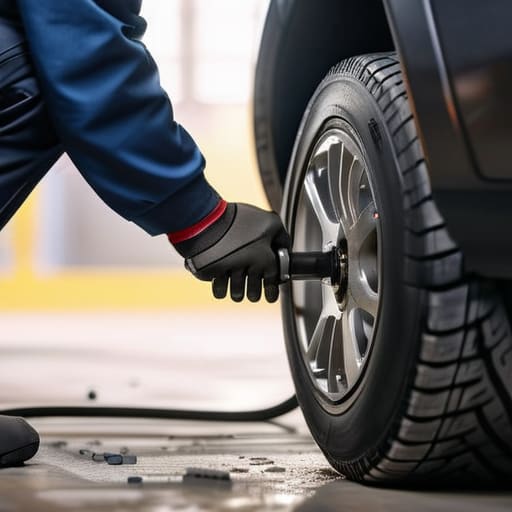
I was working on a customer’s sedan last week when I saw the invoice for their “premium tire service.” They were charged nearly eighty bucks just for a basic tire rotation that takes maybe twenty minutes if you’ve got the right gear. It honestly makes my blood boil. Most shops try to frame this like it’s some complex, high-tech procedure that requires a specialized computer, but that’s just a total scam to pad their margins. You’re paying for their overhead, not for any special magic happening to your rubber.
Look, I’m not here to give you some textbook lecture or a list of things you’ll never actually do. My goal is to show you that you can handle this yourself with just a jack and a bit of patience. I’m going to walk you through the exact way I do it in my own garage, from figuring out your specific pattern to making sure everything is torqued down right. No fluff, no unnecessary jargon—just the straight truth on how to keep your tread wearing even without getting ripped off.
Table of Contents
Spotting Even Tire Wear Patterns Before They Kill Your Grip

Before you even think about grabbing a jack, you need to actually look at what your rubber is doing. I tell my buddies all the time: don’t just wait for a light to pop up on the dash. Get down on the ground and check for even tire wear patterns. If you notice the inside edge of the tread is looking smoother than the outside, you’re likely dealing with an alignment issue or a suspension problem that’s eating your money.
You should also keep an eye on how the tread depth looks across the whole width of the tire. If one side looks like it’s been through a meat grinder while the other side looks brand new, you’re basically throwing money away. Paying attention to these small details is the easiest way to focus on extending tire lifespan without spending a dime on extra parts. It’s all about catching the problem before it turns into a blowout or a slide in the rain. Just grab a penny or a tread depth gauge and make it a habit every time you’re out in the garage.
Extending Tire Lifespan Without Paying a Mechanics Fee

Look, you don’t need to drop a couple hundred bucks at a shop just to keep your rubber from balding prematurely. Most shops will try to upsell you on a full service, but extending tire lifespan really just comes down to being proactive with what you already have. Check your pressure at least once a month. If your tires are running low, they’re going to drag, heat up, and shred your tread way faster than they should. It’s a simple fix that saves you a massive headache down the road.
You also need to pay attention to your automotive maintenance schedule regarding how often you’re actually swapping them around. For most people, hitting your tire rotation intervals every 5,000 to 7,500 miles is the sweet spot. If you’re driving an AWD rig, don’t get lazy; some of those systems require a specific pattern to avoid messing with the drivetrain. Just grab your floor jack, get the wheels off, and move them according to your manual. It’s basic stuff, but doing it yourself keeps your money in your pocket where it belongs.
5 Pro Moves to Master Your Rotation
- Check your owner’s manual first—don’t just guess. Some cars use a cross-pattern while others want a simple front-to-back swap, and if you get it wrong, you’re just scrubbing your tread for nothing.
- Grab a torque wrench and actually use it. Don’t just “feel” if the lug nuts are tight with a tire iron; if you over-tighten them or leave them loose, you’re asking for a warped rotor or a wheel flying off.
- Inspect the sidewalls every single time you jack the car up. Since you’ve already got the wheels off, check for cracks or bulges that you’d normally miss just by looking at the car from the driveway.
- Don’t forget to reset your TPMS (Tire Pressure Monitoring System). Most modern cars will throw a dashboard light at you if you move the tires around without telling the car’s computer that the positions have changed.
- Keep a dedicated pressure gauge in your glovebox. Rotating the tires is useless if you aren’t checking the PSI afterward, because different positions on the car might need slightly different pressures to stay balanced.
The Bottom Line on Keeping Your Tread Right
Don’t wait for a vibration in the steering wheel to check your tread; if you see uneven wear, your rotation schedule is already messed up.
You don’t need a shop to do this—grab a jack, a torque wrench, and twenty minutes of your time to save yourself a massive bill later.
Treat tire rotation like an oil change; it’s just basic maintenance that keeps you from buying a whole new set of rubber way too early.
The Real Cost of Ignoring Your Tread
Look, a mechanic is going to charge you fifty bucks just to move some rubber around, but if you skip it, you’re gonna end up paying a thousand for a new set because you let one corner go bald. It’s not rocket science; just swap them around so they wear even and save your cash for something better.
Nikolai·Osterman
Don't Overthink It, Just Do It
At the end of the day, rotating your tires isn’t some high-level engineering feat that requires a specialized shop or a massive invoice. It’s just about keeping an eye on those wear patterns and making sure you aren’t letting one corner of your car do all the heavy lifting. If you can spot uneven tread and you’ve got a decent jack in your garage, you’ve already done the hardest part. Taking twenty minutes to swap those wheels around is way cheaper than replacing a full set of rubber because you let them wear down prematurely. Just remember: consistency is everything when it comes to keeping your grip reliable and your wallet full.
I know it can feel intimidating when you’re staring at a car and wondering if you’re about to mess something up, but trust me, you’ve got this. Most people let mechanics charge them for “preventative maintenance” that you can handle yourself with a little bit of patience and the right tools. Don’t let the fear of a little grease under your fingernails stop you from taking control of your own machine. Once you get the hang of it, it becomes second nature. Own your maintenance, keep your car safe, and stop giving away your hard-earned money for things you can do yourself.
Frequently Asked Questions
Do I really need to rotate them if I only drive on the highway most of the time?
Honestly, yeah, you still do. Even if you’re just cruising on the highway, your front tires are doing way more work than the rears. They’re handling all the steering, most of the braking, and carrying the bulk of the weight every time you hit a bump. If you skip the rotation, those fronts are gonna bald way faster than the backs. Just swap ’em out every few months to keep things even.
How do I know if my car is front-wheel drive or all-wheel drive before I start moving tires around?
Look, you don’t want to be swapping tires blindly. The easiest way is to check your owner’s manual or look for a badge on the trunk—it’ll usually say AWD or 4WD if you’ve got it. If there’s no badge, check your floor mats; if they’re worn weirdly, it’s a hint. Honestly, just check your VIN online or look at the center differential if you’re already under there. Don’t guess; just know.
Is it okay to just swap the fronts to the back, or do I have to do that weird X-pattern thing?
Look, just swapping front-to-back is fine if you’re in a rush, but it’s not the best way to do it. If you’ve got a rear-wheel drive car, you really want that “X-pattern”—moving the fronts to the opposite rear corners and vice versa. It helps the tread wear more evenly across the whole set. If you just swap front to back, you’re basically just moving the problem around instead of fixing it.
